
Art is powerful. It’s not just something to look at or a decoration to hang on your walls; it’s an emotional outlet, a medium for personal expression, and a tool that connects us with ourselves and to others. The ability of art to transform lives transcends trends and eras, touching on something fundamentally human.
Today, we’ll explore how art has been woven into the fabric of human wellness across cultures, and the ways it can positively affect your mental well-being, and, most importantly, how you can use art to enrich your personal space, story, and life.
The Historic Role of Art in Healing
Art therapy might seem like a modern concept, but using artistic expression for healing has roots in ancient cultures across the globe. Indigenous communities used dance, singing, storytelling, and painting to process emotions, heal trauma, and connect with their communities. These rituals weren’t just cultural expressions; they were therapeutic tools.
For centuries, traditional Chinese medicine incorporated painting and calligraphy to calm the mind, while ancient Greeks believed in “catharsis” through theater to purge negative emotions. Even today, these principles are carried forward in visual art therapies designed to help people process grief, stress, or illness.
Art hasn't merely helped us survive; it has helped us heal. Whether it’s through rhythmic dance, intricate tattoos, or painting with broad, bold strokes, the act of creating or observing art opens pathways to emotions words fail to capture.
The Science of How Art Impacts Well-being
Fast forward to modern studies, and science now backs up what ancient wisdom has long known. Research has shown that viewing art releases dopamine, a brain chemical associated with pleasure and reward. Imagine walking into a gallery, standing in front of an abstract painting that speaks to you, and feeling a surge of joy—that’s no accident; that’s chemistry.
Art also helps reduce stress and anxiety. A study from the University of Westminster revealed that spending just 35 minutes in an art gallery led participants to feel 63% less stressed. But you don’t need to venture into a museum to experience these benefits. Simply allowing your eyes to linger on a thought-provoking or calming piece of art at home can evoke similar feelings of relaxation and balance.
And it’s not just about looking. Creating art—even if it never reaches a gallery wall—offers catharsis. Painting, sketching, and moulding clay can help people process complex emotions, acting as an outlet for feelings like grief, anger, or joy when words don’t suffice.
Art as Personal Expression
Have you ever stood in front of a painting and felt like it was speaking directly to you? These moments aren’t coincidences; they’re connections. Art is one of the truest ways to reflect on who you are and what you value because it embodies something deeply personal.
When you select a piece of art for your home, you aren't just filling a blank wall. You’re selecting a chapter of your personal story. Maybe it’s a serene coastal landscape that reminds you of family vacations or an abstract swirl of colours pulsing with energy, mirroring your zest for life.
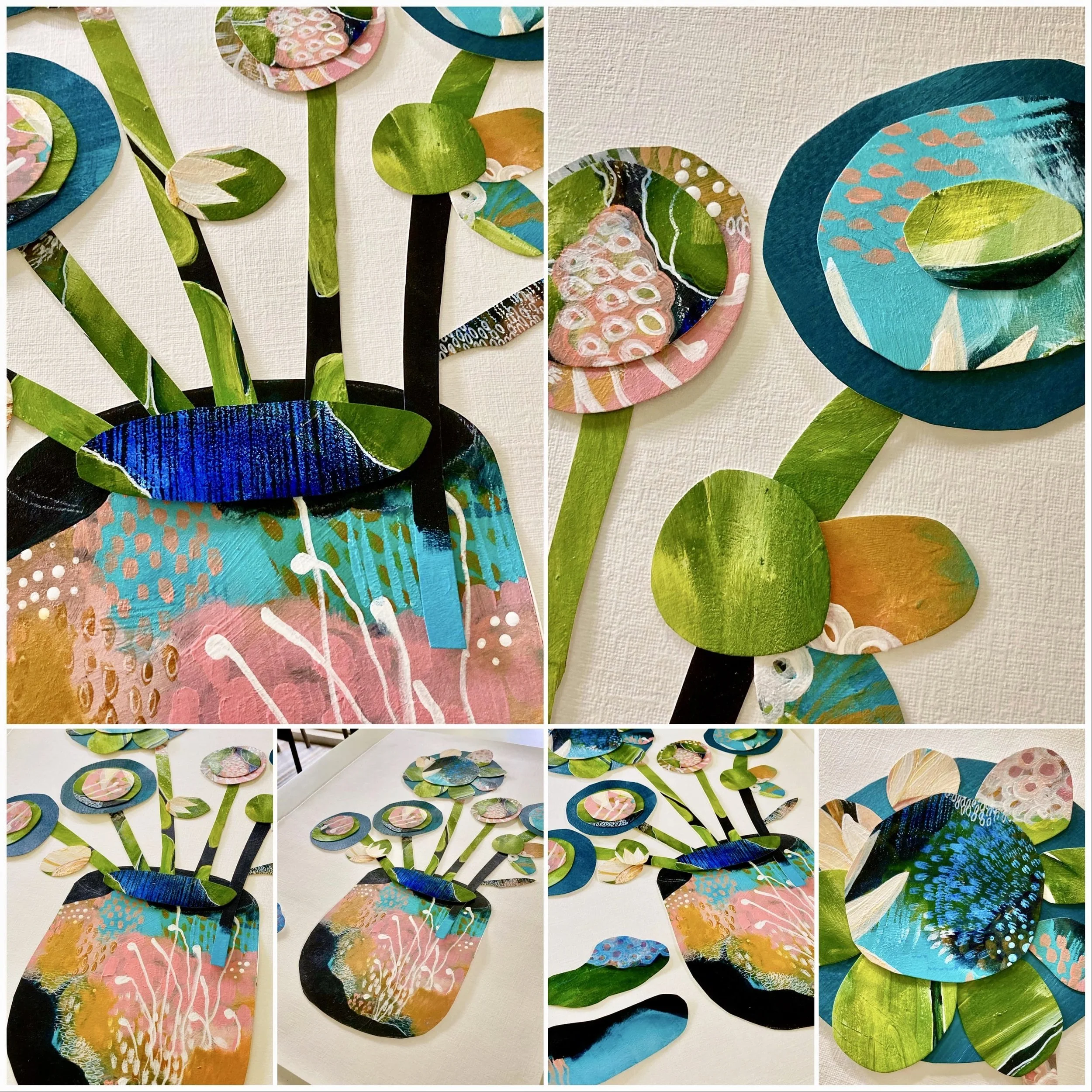
Collage Beginnings
A favourite collage painting from 2022. It was art practice, an idea and made from bits and pieces in the studio.
Abstract art, in particular, holds a unique power when it comes to personal storytelling. Its open-ended nature invites interpretation, making it an intimate reflection of your own emotions, experiences, and tastes. For instance, a bold red stroke in an abstract canvas may evoke strength to one person and passion to another. That’s the beauty of abstract expressionism—no two people will see or feel the same thing.
Curating Intentional Spaces with Art
Our spaces shape our emotions and moods more than we realise. Imagine entering a room painted in warm yellows and soft pinks versus walking into one filled with muted greys and blues. The atmosphere changes instantly, and so does the way you feel.
Art plays a central role in these transformations. A vibrant piece can energize a living room, while a minimalist black-and-white sketch can bring calm to a busy workspace.
Choosing the Right Art for Intentional Spaces
Start by thinking about the mood you want to create:
Calming Spaces: Use soft blues, soothing greens, and muted palettes for bedrooms or meditation corners. Artprints depicting natural themes like forests or oceans can create a peaceful retreat.
Energizing Areas: Yellow and red are colors of vitality and energy. They work beautifully in dining rooms, entryways, or anywhere you want to inspire conversation and creativity.
Personal Touches: Don’t forget to make it personal. Incorporate pieces that hold meaning for you, like landscapes from your hometown or handmade artwork that reflects your values.
For example, collage art can be an excellent way to blend colors, textures, and even themes. Unique mixed-media pieces with vibrant yet balanced compositions, such as layered paper collages or abstract tropical-inspired prints, offer both spontaneity and depth.

Fine Art Print: Let’s Play
Art and Authenticity
True art, whether it hangs in a frame or lives on a wall, mirrors our inner selves. There’s a beautiful vulnerability in choosing art that resonates with your feelings, evokes memories, or expresses beliefs. That’s why authenticity matters so much in design and self-expression.
Think of the last time you walked into a friend’s home and immediately understood a piece of who they were based on what they chose to hang on their walls. A bold statement piece of abstract art, a serene nature print, or a playful, colourful design often tells a deeper story about the person who selected it.
Now, imagine doing the same for your visitors. What story would your art tell them about you?
Art Turns a House into a Home
When you sprinkle your home with pieces of art that speak to you, it becomes more than a place to eat and sleep. It becomes a haven.
Your walls hold not just the structure of your house, but also memories, values, and emotions. A thoughtfully curated gallery wall or even a single statement piece above your couch can completely transform the way a space feels and functions.

A stunning gallery wall features five images capturing the beauty of the ocean: waves crashing, serene tides, trees, a sunrise, and the delicate shadow of someone imprinted on the sand. Together, these pieces evoke a sense of calm and connection to the sea.
By intentionally weaving art into your home’s story, you’re not just decorating; you’re creating a unique haven that celebrates your experiences and personality every single day.
Take the First Step Toward Transformation
Art has the power to change how we feel, think, and experience life. Whether it’s adding a unique collage piece to brighten your office or transforming your living room with abstract tropical artwork. Every piece brings you closer to creating a space that feels authentically you.
At Rimaad Art Studio, we believe in helping you find art that not only resonates with your personal story but also transforms your home into a sanctuary. Browse our curated collections for richly personal, vibrant pieces that spark connection and creativity.
Rachel & Grace xoxo
Research Studies and Resources:
The references provided below offer a robust foundation for those of you wanting to learn more about art, mental health, well being and connection.
https://pmc.ncbi.nlm.nih.gov/articles/PMC2804629/ 4 major areas of arts and health care emerged from our review: music engagement, visual arts therapy, movement-based creative expression, and expressive writing. Therefore, we focused on the potential of these creative areas to promote healing.
https://www.earth.com/news/simply-looking-at-art-can-improve-your-well-being/ ART is often linked with creativity and expression. Many people consider it purely decorative, but new findings suggest that looking at paintings, sculptures, or photographs may hold genuine benefits for personal growth and meaning in life. The study was led by MacKenzie Trupp from the University of Vienna and the Donders Institute, along with collaborators from Trinity College Dublin and Humboldt University of Berlin. https://www.earth.com/news/simply-looking-at-art-can-improve-your-well-being/
https://creative.gov.au/research/creating-wellbeing-attitudes-and-engagement-arts-culture-and-health
https://breatheahr.org/groundbreaking-new-research-reveals-the-power-of-the-arts-to-improve-physical-and-mental-wellbeing/ A groundbreaking study, commissioned by the UK government’s Department for Culture, Media and Sport (DCMS), quantifies the extraordinary impact that the arts and culture have on our physical and mental health. The research, conducted by Frontier Economics in collaboration with UCL’s World Health Organisation Collaborating Centre for Arts and Health, has shown that participating in arts activities has measurable, significant benefits for individuals and society. From reducing symptoms of depression and anxiety to boosting productivity and quality of life, the findings reinforce the very core of our mission to use the arts as a tool for health and wellbeing.
https://thewholeu.uw.edu/2023/06/21/looking-at-art/ Why look at art? It can make you feel good. A University of London study demonstrated that looking at beautiful (to the beholder) art can create an instant dopamine release, creating feelings of happiness and gratitude akin to looking at someone you love.
